Discover Nikkei Logo

https://www.discovernikkei.org/en/interviews/clips/1001/

Wanting to take a stand

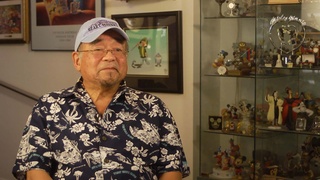
I felt very strongly about the unfairness of the whole thing for one thing. I thought it was very unfair that the government would uh put you in this position and then expect you to be drafted on the same basis as the free people on the outside. That was totally unacceptable. And uh, some of us, lot of us felt the same way so uh, that’s why we were able to take this step. Well, after awhile several meetings we said, some of us thought that we better go a step further. Instead of just being informational, take, take a stand.

Well we had a pretty serious uh steering committee meeting before that ‘cause some of the, there was one or two guys that uh didn’t want to go that strong. They said you know we might get in trouble. And one of them who was a college graduate at that time, was the one that said well you know, Paul Wakanate, he was a good speaker, a very good speaker. But he said well you shouldn’t go that strong and uh I guess I must have argued with him pretty badly because uh one of the fellas said hey Frank, talk to me like that I’d either haul off and hit him or start running like hell. So anyway, we took a vote and those of us that wanted to take a stronger stand on it came out ahead and we actually came out and said that we will refuse to go until our rights are restored.


civil rights draft resisters Heart Mountain Heart Mountain concentration camp Heart Mountain Fair Play Committee imprisonment incarceration resistance resisters United States World War II World War II camps Wyoming

Date: May 9, 2006

Location: California, US

Interviewer: Lisa Itagaki

Contributed by: Watase Media Arts Center, Japanese American National Museum

Interviewee Bio

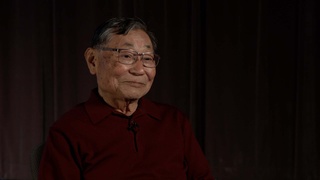
Frank Emi was born on September 23, 1916 in Los Angeles, CA. He ran the family produce business until life was interrupted by war. Emi was sent to Heart Mountain, Wyoming with his young wife and two kids.

Emi, along with many others, openly questioned the constitutionality of the incarceration of Japanese Americans. He helped form the Heart Mountain Fair Play Committee and protested against the government’s actions by organizing a draft resistance. Emi was not even eligible for the draft because he was a father.

The Fair Play Committee argued that they were willing to serve in the military, but not until their rights as U.S. citizens were restored and their families released from the camps. The government convicted Emi and six others leaders of conspiracy to evade the draft. He served 18 months in jail. 86 others from Heart Mountain were put on trial and imprisoned for resisting the draft.

Following the war, Emi and other draft resisters were ostracized by Japanese American leaders and veterans. It was not until the fight for Redress, some forty years later that the Fair Play Committee was vindicated for taking a principled stand against injustice.

He passed away on December 2010 at age 94. (December 2010)

Peter Irons
en
ja
es
pt
Peter Irons

Learning About the Internment

(b. 1940) Attorney, Coram nobis cases.

en
ja
es
pt
George Yamada
en
ja
es
pt
George Yamada

Japanese American railroad workers are fired following the bombing of Pearl Harbor

(b. 1923) Chick sexer

en
ja
es
pt
Peter Irons
en
ja
es
pt
Peter Irons

Lesson to be Learned

(b. 1940) Attorney, Coram nobis cases.

en
ja
es
pt
George Yamada
en
ja
es
pt
George Yamada

A racist encounter at a movie theater following the bombing of Pearl Harbor

(b. 1923) Chick sexer

en
ja
es
pt
Chiye Tomihiro
en
ja
es
pt
Chiye Tomihiro

Too Ashamed to Tell

Chaired the Chicago JACL's Redress Committee.

en
ja
es
pt
Jimmy Ko Fukuhara
en
ja
es
pt
Jimmy Ko Fukuhara

Traveling to Manzanar

(b. 1921) Nisei veteran who served in the occupation of Japan
en
ja
es
pt
Bert Nakano
en
ja
es
pt
Bert Nakano

It’s the People

(1928 - 2003) Political activist

en
ja
es
pt
George Yoshida
en
ja
es
pt
George Yoshida

We’re Still Japanese

(b. 1922) Musician

en
ja
es
pt
William Marutani
en
ja
es
pt
William Marutani

Recalling Pinedale and Tule Lake concentration camps

Judge, only Japanese American to serve on CWRIC.

en
ja
es
pt
Kathryn Doi Todd
en
ja
es
pt
Kathryn Doi Todd

On the Impact of the Camp Experience

(b. 1942) The first Asian American woman judge

en
ja
es
pt
William Marutani
en
ja
es
pt
William Marutani

Becoming active in the Civil Rights Movement

Judge, only Japanese American to serve on CWRIC.

en
ja
es
pt
William Marutani
en
ja
es
pt
William Marutani

A memorable CWRIC testimony of an unjust situation

Judge, only Japanese American to serve on CWRIC.

en
ja
es
pt
William Marutani
en
ja
es
pt
William Marutani

Post-redress future of Japanese Americans

Judge, only Japanese American to serve on CWRIC.

en
ja
es
pt
Clifford Uyeda
en
ja
es
pt
Clifford Uyeda

Attempts to sign up for military service

(1917 - 2004) Political activist

en
ja
es
pt

Discover Nikkei Updates

NIMA VOICES
Episode 19
Guest host Tamlyn Tomita chatted with actor Christopher Sean in the latest episode of Nima Voices about his background, acting, and community involvement.
WATCH NOW!
NIKKEI CHRONICLES #14
Nikkei Family 2: Remembering Roots, Leaving Legacies
Find out which stories were selected as the Editorial Committee and Nima-kai Community Favorites!
SUPPORT THE PROJECT
Discover Nikkei’s 20 for 20 campaign celebrates our first 20 years and jumpstarts our next 20. Learn more and donate!