Discover Nikkei Logo

https://www.discovernikkei.org/en/interviews/clips/796/

Change in sense of Nikkei Brazilian identity over time (Portuguese)

(Portuguese) Well, with regard to the meaning and importance of the term Nikkei, I think that personally, within my life, I would single out two moments. Two or even three moments let’s say. The first was when I entered college. There, in college, you end up having a greater consciousness of the fact that you have to become a part of society as a whole, and that you have to in effect be a Brazilian, right.

And I started college in sixty-eight, in the history program, and that was a very important period in Brazil, and throughout the world, which was the period of the student movement. And so there you had that thing, that preoccupation with wanting to be Brazilian. And you end up in conflict because in spite of wanting to be Brazilian, you have this Japanese face, and you’re always being reminded of it. So, that was a very important moment for trying to understand these two sides.

And then, in the seventies, beginning of the eighties, when I started working as a journalist for a Nippo-Brazilian paper. It was a daily paper, with a lot of pages, and just one page in Portuguese, which was precisely a page that I did. And later on I worked for other papers, always ones focused on people of Japanese descent, talking about our community, about culture, etcetera. So, that was a very important moment in terms of Nikkei, in the sense of you in effect having the responsibility, as someone who works in the media, being responsible for relating news that is as close to the truth as possible.

And the third moment then was in ninety-eight when I came to serve as director of the Museum of Japanese Immigration. Which is another responsibility because suddenly you’re in charge of preserving the memory of those Japanese immigrants. I have no idea in fifty years, or a hundred years, what will remain of the memory of our parents and grandparents. So, I think those were three very important moments, and the issue of Nikkei has always been at the center of my life.


Brazil identity Nikkei United States

Date: Oct 7, 2005

Location: California, US

Interviewer: Ann Kaneko

Contributed by: Watase Media Arts Center, Japanese American National Museum.
Interviewee Bio

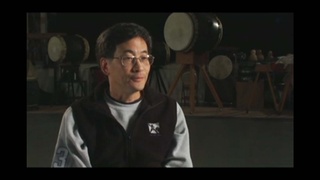
Célia Abe Oi was born in Itapetininga in 1950. Her grandparents had arrived in Brazil in 1929. Originally from a family of fishermen on the island of Atatajima, near the city of Hiroshima, upon their arrival they began working in the Brazilian countryside, initially in the cotton fields and later growing potatoes. Her parents and siblings also worked in agriculture. In 1968, she began studying History in college, and in 1979 completed her course in Journalism at the Cásper Líbero College. In the mid-1970s, she began working in the editorial room of the Portuguese section of the Diário Nippak newspaper. Célia contributed to various journals and publications tied to the Japanese-Brazilian community, until she became the director of the Museum of the History of Japanese Immigration in 1998. (July 26, 2006)

Art Shibayama
en
ja
es
pt
Art Shibayama

Activities growing up in Peru

(1930-2018) Nisei born in Peru. Taken to the United States during WWII.

en
ja
es
pt
Roger Shimomura
en
ja
es
pt
Roger Shimomura

Depicting issues of ethnic identity through childhood artwork

(b. 1939) Japanese American painter, printmaker & professor

en
ja
es
pt
Frank Yamasaki
en
ja
es
pt
Frank Yamasaki

Starting over after the war: denial of all things Japanese

(b. 1923) Nisei from Washington. Resisted draft during WWII.

en
ja
es
pt
Frank Yamasaki
en
ja
es
pt
Frank Yamasaki

Have compassion for all of humanity

(b. 1923) Nisei from Washington. Resisted draft during WWII.

en
ja
es
pt
Frank Yamasaki
en
ja
es
pt
Frank Yamasaki

Thoughts on post-9/11 atmosphere: what it means to be American

(b. 1923) Nisei from Washington. Resisted draft during WWII.

en
ja
es
pt
Sam Naito
en
ja
es
pt
Sam Naito

Growing up outside of Portland’s Japanese community

(b. 1921) Nisei businessman. Established "Made in Oregon" retail stores

en
ja
es
pt
Kenny Endo
en
ja
es
pt
Kenny Endo

Internship on a Native American reservation in Arizona

(b.1952) Master drummer, artistic director of the Taiko Center of the Pacific

en
ja
es
pt
Seiichi Tanaka
en
ja
es
pt
Seiichi Tanaka

Differences between American-born Japanese and Japanese from Japan

(b.1943) Shin-issei grand master of taiko; founded San Francisco Taiko Dojo in 1968.

en
ja
es
pt
Seiichi Tanaka
en
ja
es
pt
Seiichi Tanaka

Differences between American and Japanese taiko

(b.1943) Shin-issei grand master of taiko; founded San Francisco Taiko Dojo in 1968.

en
ja
es
pt
Enson Inoue
en
ja
es
pt
Enson Inoue

Growing up in a Japanese American family

(b. 1967) Hawai`i-born professional fighter in Japan

en
ja
es
pt
Enson Inoue
en
ja
es
pt
Enson Inoue

Sudden acceptance in Japanese society

(b. 1967) Hawai`i-born professional fighter in Japan

en
ja
es
pt
Enson Inoue
en
ja
es
pt
Enson Inoue

Disadvantages of looking Japanese

(b. 1967) Hawai`i-born professional fighter in Japan

en
ja
es
pt
Enson Inoue
en
ja
es
pt
Enson Inoue

Ring name: "Yamato Damashi"

(b. 1967) Hawai`i-born professional fighter in Japan

en
ja
es
pt
Enson Inoue
en
ja
es
pt
Enson Inoue

Citizenship and identity

(b. 1967) Hawai`i-born professional fighter in Japan

en
ja
es
pt
Kip Fulbeck
en
ja
es
pt
Kip Fulbeck

Early consciousness of identity

(b. 1965) filmmaker and artist

en
ja
es
pt

Discover Nikkei Updates

NIKKEI CHRONICLES #14
Nikkei Family 2: Remembering Roots, Leaving Legacies
Read the stories and give a star to the ones you like the most! Help select our Community Favorite.
Vote for Nima-kai Favorite!
VIRTUAL PROGRAM
Nikkei Uncovered V: a poetry reading
Tuesday, December 9
Hosted by traci kato-kiriyama
Featuring Aaron Caycedo-Kimura, Erica Isomura, and Syd Westley
SUPPORT THE PROJECT
Discover Nikkei’s 20 for 20 campaign celebrates our first 20 years and jumpstarts our next 20. Learn more and donate!