Discover Nikkei Logo

https://www.discovernikkei.org/en/interviews/clips/616/

Institutionalization as a bad aspect of camp

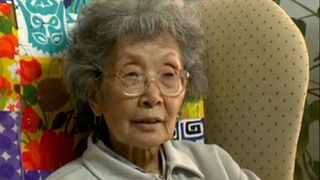
I think the lack of privacy was such a big thing. You couldn’t get away to have any kind of privacy. That does something. It was such a controlled community that way. And when you don’t have your own space, it does something to you, I think. It was a good thing that it did not last much longer, because as one of the fellows said in the testimony before the Commission [on Wartime Relocation and Internment of Civilians], that even if it [the incarceration] was three or four years, people got used to being institutionalized, being taken care of. And it was showing signs of lack of discipline, lack of initiative on the part of people. And especially Issei, who had lost everything, anyway. They had no initiative to go and start life anew and it got harder [as they remained in the camps], so they were so much fearful when it was announced that the camps would close. They were afraid to go out. And this institutionalization was a bad aspect of the camps.


imprisonment incarceration World War II World War II camps

Date: Aug 26, 1998

Location: Virginia, US

Interviewer: Darcie Iki, Mitchell Maki

Contributed by: Watase Media Arts Center, Japanese American National Museum
Interviewee Bio

Aiko Yoshinaga Herzig was born in Sacramento, California in 1924. Her family immigrated from Kumamoto, Japan in 1919. During the Depression, the Yoshinaga family moved to Los Angeles, California.

During World War II, Aiko was incarcerated first at Manzanar with her husband’s family. She transferred to Jerome, Arkansas with her newborn daughter to be with her family. In 1944, the Yoshinaga family left Jerome and resettled in New York. She divorced and remarried a Nisei soldier. She went with him to Japan where he worked during the Occupation period. One of her husband’s co-workers was her future husband, Jack Herzig.

After her return to the United States, Aiko became involved in Asian Americans for Action. Aiko and Jack played a pivotal role in the Redress Movement through their research at the National Archives in Washington D.C. The documents they found were instrumental in the coram nobis case that vacated the convictions against Fred Korematsu, Min Yasui, and Gordon Hirabayashi. Aiko was also hired as the primary researcher for the Commission on Wartime Relocation and Internment of Civilians, and then worked for the Department of Justice Office of Redress Administration to help identify individuals eligible for redress payments. 

She passed away on July 18, 2018 at age 93. (July 2018)

Yuri Kochiyama
en
ja
es
pt
Yuri Kochiyama

Conditions of assembly centers

(1922–2014) Political and civil rights activist.

en
ja
es
pt
Yuri Kochiyama
en
ja
es
pt
Yuri Kochiyama

Visit to assembly centers by E. Stanley Jones

(1922–2014) Political and civil rights activist.

en
ja
es
pt
Yuri Kochiyama
en
ja
es
pt
Yuri Kochiyama

Postcards to Nisei soldiers

(1922–2014) Political and civil rights activist.

en
ja
es
pt
Yuri Kochiyama
en
ja
es
pt
Yuri Kochiyama

Hiding what happened in camp

(1922–2014) Political and civil rights activist.

en
ja
es
pt
Yuri Kochiyama
en
ja
es
pt
Yuri Kochiyama

Issei are hard-working

(1922–2014) Political and civil rights activist.

en
ja
es
pt
Yuri Kochiyama
en
ja
es
pt
Yuri Kochiyama

Arrest of father

(1922–2014) Political and civil rights activist.

en
ja
es
pt
Yuri Kochiyama
en
ja
es
pt
Yuri Kochiyama

Camp as a positive thing

(1922–2014) Political and civil rights activist.

en
ja
es
pt
Yuri Kochiyama
en
ja
es
pt
Yuri Kochiyama

Mr. Finch, godfather of the 442nd

(1922–2014) Political and civil rights activist.

en
ja
es
pt
Yuri Kochiyama
en
ja
es
pt
Yuri Kochiyama

Rounding up Issei and Nikkei

(1922–2014) Political and civil rights activist.

en
ja
es
pt
Archie Miyatake
en
ja
es
pt
Archie Miyatake

His father describes the importance of photographing camp life

(1924-2016) Photographer and businessman.

en
ja
es
pt
Yukio Takeshita
en
ja
es
pt
Yukio Takeshita

Involvement in JACL

(b.1935) American born Japanese. Retired businessman.

en
ja
es
pt
Grayce Ritsu Kaneda Uyehara
en
ja
es
pt
Grayce Ritsu Kaneda Uyehara

Importance of education in achieving redress for incarceration

(1919-2014) Activist for civil rights and redress for World War II incarceration of Japanese Americans.

en
ja
es
pt
Roy H. Matsumoto
en
ja
es
pt
Roy H. Matsumoto

Mixed emotions after declaration of war on Japan

(b.1913) Kibei from California who served in the MIS with Merrill’s Marauders during WWII.

en
ja
es
pt
Roy H. Matsumoto
en
ja
es
pt
Roy H. Matsumoto

Finding work in the assembly center

(b.1913) Kibei from California who served in the MIS with Merrill’s Marauders during WWII.

en
ja
es
pt
Roy H. Matsumoto
en
ja
es
pt
Roy H. Matsumoto

Train ride to Jerome Relocation Center

(b.1913) Kibei from California who served in the MIS with Merrill’s Marauders during WWII.

en
ja
es
pt

Discover Nikkei Updates

NIKKEI CHRONICLES #14
Nikkei Family 2: Remembering Roots, Leaving Legacies
Read the stories and give a star to the ones you like the most! Help select our Community Favorite.
Vote for Nima-kai Favorite!
VIRTUAL PROGRAM
Nikkei Uncovered V: a poetry reading
Tuesday, December 9
Hosted by traci kato-kiriyama
Featuring Aaron Caycedo-Kimura, Erica Isomura, and Syd Westley
SUPPORT THE PROJECT
Discover Nikkei’s 20 for 20 campaign celebrates our first 20 years and jumpstarts our next 20. Learn more and donate!