Discover Nikkei Logo

https://www.discovernikkei.org/en/interviews/clips/565/

Mixed blood people at camp from a child's point of view

No, they knew he [Ralph Lazo] was Mexican. Or I don’t know if they knew he was Mexican, but they knew that he was not Japanese. But you see, there were other mixed blood people in camp and there was a Caucasian woman who lived actually right across from us. And she was Caucasian, but she was married to a Japanese man. So the daughter was, you know, mixed blood. But, see, I’m seeing it from a child’s point of view. I don’t know how adults were thinking about it or how it was perceived otherwise. There was another young man. He was married, actually. His name was Harry Mayeda and his mother was Caucasian. So there were, you know, mixed blood people in camp.


California concentration camps imprisonment incarceration Manzanar concentration camp racially mixed people Ralph Lazo United States World War II World War II camps

Date: Dec 27, 2005

Location: California, US

Interviewer: John Esaki

Contributed by: Watase Media Arts Center, Japanese American National Museum
Interviewee Bio

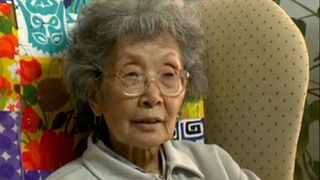
Jeanne Wakatsuki Houston, co-author of the acclaimed Farewell to Manzanar, was born in 1934 in Inglewood, California. The youngest of ten children, she spent her early childhood in Southern California until 1942 when she and her family were incarcerated at the World War II concentration camp at Manzanar, California.

In 1945, the family returned to Southern California where they lived until 1952 when they moved to San Jose, California. Houston was the first in her family to earn a college degree. She met James D. Houston while attending San Jose State University. They married in 1957 and have three children.

In 1971, a nephew who had been born at Manzanar asked Houston to tell him about what the camp had been like because his parents refused to talk about it. She broke down as she began to tell him, so she decided instead to write about the experience for him and their family. Together with her husband, Houston wrote Farewell to Manzanar. Published in 1972, the book is based on what her family went through before, during, and after the war. It has become a part of many school curricula to teach students about the Japanese American experience during WWII. It was made into a made-for-television movie in 1976 that won a Humanitas Prize and was nominated for an Emmy in the category of Outstanding Writing in a Drama.

Since Farewell to Manzanar, Houston has continued to write both with her husband and on her own. In 2003, her first novel, The Legend of Fire Horse Woman was published. She also provides lectures in both university and community settings. In 2006, Jeanne Wakatsuki Houston received the Award of Excellence for her contributions to society from the Japanese American National Museum.

She passed away in December 2024 at age 90. (January 2025)

George Ariyoshi
en
ja
es
pt
George Ariyoshi

Ethnic diversity

(b.1926) Democratic politician and three-term Governor of Hawai'i

en
ja
es
pt
George Ariyoshi
en
ja
es
pt
George Ariyoshi

Prom during the war

(b.1926) Democratic politician and three-term Governor of Hawai'i

en
ja
es
pt
George Ariyoshi
en
ja
es
pt
George Ariyoshi

Influence of veterans

(b.1926) Democratic politician and three-term Governor of Hawai'i

en
ja
es
pt
Jean Hayashi Ariyoshi
en
ja
es
pt
Jean Hayashi Ariyoshi

Day Pearl Harbor was bombed

Former First Lady of Hawai'i

en
ja
es
pt
Kazuo Funai
en
ja
es
pt
Kazuo Funai

Japan vs. the United States (Japanese)

(1900-2005) Issei businessman

en
ja
es
pt
Kazuo Funai
en
ja
es
pt
Kazuo Funai

Company in Tokyo burned down (Japanese)

(1900-2005) Issei businessman

en
ja
es
pt
James Hirabayashi
en
ja
es
pt
James Hirabayashi

Life in camp as teenager

(1926 - 2012) Scholar and professor of anthropology. Leader in the establishment of ethnic studies as an academic discipline

en
ja
es
pt
Robert Katayama
en
ja
es
pt
Robert Katayama

Being ordered to keep a diary that was later confiscated, ostensibly by the FBI

Hawaiian Nisei who served in World War II with the 442nd Regimental Combat Team.

en
ja
es
pt
Barbara Kawakami
en
ja
es
pt
Barbara Kawakami

Bombing of Pearl Harbor

An expert researcher and scholar on Japanese immigrant clothing.

en
ja
es
pt
Barbara Kawakami
en
ja
es
pt
Barbara Kawakami

Helping soldiers

An expert researcher and scholar on Japanese immigrant clothing.

en
ja
es
pt
Barbara Kawakami
en
ja
es
pt
Barbara Kawakami

Brother leaves for war, survival

An expert researcher and scholar on Japanese immigrant clothing.

en
ja
es
pt
Yuri Kochiyama
en
ja
es
pt
Yuri Kochiyama

Didn't have rights that whites had

(1922–2014) Political and civil rights activist.

en
ja
es
pt
Yuri Kochiyama
en
ja
es
pt
Yuri Kochiyama

Californians didn't know about evacuation

(1922–2014) Political and civil rights activist.

en
ja
es
pt
Yuri Kochiyama
en
ja
es
pt
Yuri Kochiyama

The day Pearl Harbor was bombed

(1922–2014) Political and civil rights activist.

en
ja
es
pt
Yuri Kochiyama
en
ja
es
pt
Yuri Kochiyama

Father as prisoner of war in hospital

(1922–2014) Political and civil rights activist.

en
ja
es
pt

Discover Nikkei Updates

NIKKEI CHRONICLES #14
Nikkei Family 2: Remembering Roots, Leaving Legacies
Read the stories and give a star to the ones you like the most! Help select our Community Favorite.
Vote for Nima-kai Favorite!
VIRTUAL PROGRAM
Nikkei Uncovered V: a poetry reading
Tuesday, December 9
Hosted by traci kato-kiriyama
Featuring Aaron Caycedo-Kimura, Erica Isomura, and Syd Westley
SUPPORT THE PROJECT
Discover Nikkei’s 20 for 20 campaign celebrates our first 20 years and jumpstarts our next 20. Learn more and donate!