Discover Nikkei Logo

https://www.discovernikkei.org/en/interviews/clips/952/

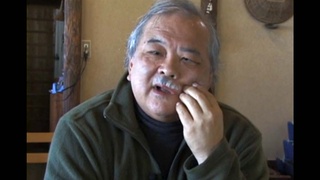
Childhood shame for being Nikkei in Enumclaw, Washington

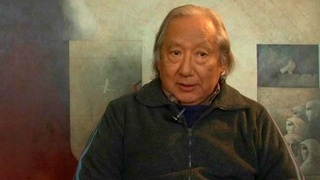
Oh, I think there was a great deal of shame, not justified shame. I recall very distinctly not letting the other kids see what I brought to school for lunch. If it were rice with some meat in it, on the side, and tsukemono (Japanese Pickles) or whatever, there was a great deal of pressure not to reveal this kind of information to your hakujin (European American) classmates. I did not want my hakujin classmates to see me eating with chopsticks. I think that begins to tell a little bit of the story of my upbringing within that community, which is predominantly white.

As I grew older and particularly after I finished law school, or even during law school, I actually took pride in using chopsticks, and I would deliberately go out of my way to use chopsticks if my Caucasian friends were around. So it was kind of a complete reversal.


food identity Japanese food pickles tsukemono

Date: Aug 27, 1998

Location: Pennsylvania, US

Interviewer: Darcie Iki, Mitchell Maki

Contributed by: Watase Media Arts Center, Japanese American National Museum
Interviewee Bio

The Honorable William Marutani was born in Kent, Washington. With the enforcement of Executive Order 9066, Marutani was forced to leave his classes at the University of Washington and sent to Fresno Assembly Center in 1942, and later Tule Lake concentration camp. He was released to attend Dakota Wesleyan University in Mitchell, SD in the fall of 1942 as a pre-law student.

After being rejected by the U.S. Navy for being classified as a 4-C enemy alien, Marutani was finally able to serve by joining the Army where he was assigned to the Military Intelligence Service. Following his service, Marutani attended law school at the University of Chicago and moved to Pennsylvania for a six-month clerkship, where he stayed until 1975, when he was appointed to the bench of the Philadelphia Court of Common Pleas.

Marutani became active in the Japanese American Citizens League (JACL) and served in many different positions. Marutani was appointed to serve on the nine-member Commission on Wartime Relocation and Internment of Civilians (CWRIC) that was created by President Jimmy Carter to investigate matters concerning the wartime incarceration of Japanese Americans. Marutani was the only Japanese American to serve on the commission. (April 11, 2008)

James Hirabayashi
en
ja
es
pt
James Hirabayashi

Nickname

(1926 - 2012) Scholar and professor of anthropology. Leader in the establishment of ethnic studies as an academic discipline

en
ja
es
pt
James Hirabayashi
en
ja
es
pt
James Hirabayashi

Not bringing shame to family

(1926 - 2012) Scholar and professor of anthropology. Leader in the establishment of ethnic studies as an academic discipline

en
ja
es
pt
James Hirabayashi
en
ja
es
pt
James Hirabayashi

Context affects meaning

(1926 - 2012) Scholar and professor of anthropology. Leader in the establishment of ethnic studies as an academic discipline

en
ja
es
pt
James Hirabayashi
en
ja
es
pt
James Hirabayashi

Testing assumptions of Japanese scholars

(1926 - 2012) Scholar and professor of anthropology. Leader in the establishment of ethnic studies as an academic discipline

en
ja
es
pt
Steve Kaji
en
ja
es
pt
Steve Kaji

FOB's

Hawaii born Nikkei living in Japan. English Teacher at YMCA.

en
ja
es
pt
Eric Morton
en
ja
es
pt
Eric Morton

Addressing multiracial identity can be difficult

Starred at wide receiver for Dartmouth College, now a patent attorney. Brother of Johnnie and Chad Morton.

en
ja
es
pt
Ann K. Nakamura
en
ja
es
pt
Ann K. Nakamura

Image of Americans

Sansei from Hawaii living in Japan. Teacher and businesswoman.

en
ja
es
pt
Robert (Bob) Kiyoshi Okasaki
en
ja
es
pt
Robert (Bob) Kiyoshi Okasaki

Grandmother's influence on decision to go to Japan

(b.1942) Japanese American ceramist, who has lived in Japan for over 30 years.

en
ja
es
pt
Robert (Bob) Kiyoshi Okasaki
en
ja
es
pt
Robert (Bob) Kiyoshi Okasaki

Band-Aid realization

(b.1942) Japanese American ceramist, who has lived in Japan for over 30 years.

en
ja
es
pt
Robert (Bob) Kiyoshi Okasaki
en
ja
es
pt
Robert (Bob) Kiyoshi Okasaki

Japanese influence growing up

(b.1942) Japanese American ceramist, who has lived in Japan for over 30 years.

en
ja
es
pt
Robert (Bob) Kiyoshi Okasaki
en
ja
es
pt
Robert (Bob) Kiyoshi Okasaki

Looking at your country from the outside

(b.1942) Japanese American ceramist, who has lived in Japan for over 30 years.

en
ja
es
pt
Robert (Bob) Kiyoshi Okasaki
en
ja
es
pt
Robert (Bob) Kiyoshi Okasaki

Wife's family in Japan

(b.1942) Japanese American ceramist, who has lived in Japan for over 30 years.

en
ja
es
pt
Yukio Takeshita
en
ja
es
pt
Yukio Takeshita

Lack of notion of citizenship in Japan

(b.1935) American born Japanese. Retired businessman.

en
ja
es
pt
Yukio Takeshita
en
ja
es
pt
Yukio Takeshita

Involvement in JACL

(b.1935) American born Japanese. Retired businessman.

en
ja
es
pt
Jane Aiko Yamano
en
ja
es
pt
Jane Aiko Yamano

Lack of language skills

(b.1964) California-born business woman in Japan. A successor of her late grandmother, who started a beauty business in Japan.

en
ja
es
pt

Discover Nikkei Updates

NIMA VOICES
Episode 19
Guest host Tamlyn Tomita chatted with actor Christopher Sean in the latest episode of Nima Voices about his background, acting, and community involvement.
WATCH NOW!
NIKKEI CHRONICLES #14
Nikkei Family 2: Remembering Roots, Leaving Legacies
Find out which stories were selected as the Editorial Committee and Nima-kai Community Favorites!
SUPPORT THE PROJECT
Discover Nikkei’s 20 for 20 campaign celebrates our first 20 years and jumpstarts our next 20. Learn more and donate!