Discover Nikkei Logo

https://www.discovernikkei.org/en/interviews/clips/689/

Japanese American railroad workers are fired following the bombing of Pearl Harbor

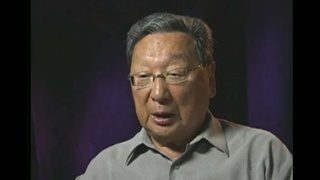
The FBI—my dad, in order to get to his mail job at Great Northern Railroad, had to go under the United Union Pacific, the Milwaukee Railroad tracks. And it was railroad track that came right through into Spokane. Great Northern was a block north of that station, Union Pacific, but Union Pacific was all on girders. And they came in, you had to walk up to the railroad station, and underneath, we had to walk through to get to the employment, railroad. And the FBI says, “No, you can't do that. You can't be caught walking under a bridge, we're afraid you might bomb it.” And so they fired every one of the Japanese, and there were a couple of Italians working there, Felice and Mancheny, Clark, were working there. And they couldn't handle, even with the new, whoever they hired for the mail, the mail was all screwed up, it was going all over the country instead of to the right destination. So after, I think, thirty days, they had to rehire all the Japanese again, so the mail started to run in the direction they were supposed to be going.


discrimination interpersonal relations racism railroads World War II

Date: Mar 15, 2006

Location: Washington, US

Interviewer: Megan Asaka

Contributed by: Denshō: The Japanese American Legacy Project.
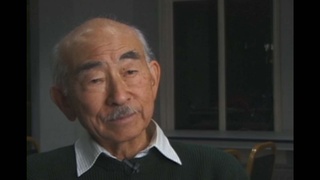
Interviewee Bio

Nisei male. Born 1923 in Spokane, Washington. Spent childhood in downtown Spokane where parents ran the World Hotel. Father also worked as a mail handler for the Great Northern Railroad. Attended Lewis and Clark High School and Washington State University. During the war remembers seeing train cars pass through Spokane with Japanese Americans headed to Heart Mountain incarceration camp, Wyoming. Drafted into the army in 1944 and served at the Military Intelligence Service Language School in Fort Snelling, Minnesota and Presidio, California. After World War II, worked as a chick sexer in upstate New York and surrounding region for thirty years. Returned to Spokane in the mid-1970s and pursued a career in real estate. Currently lives with wife, Susie, in Spokane and is an active fly fisherman. (March 16, 2006 )

James Hirabayashi
en
ja
es
pt
James Hirabayashi

Not bringing shame to family

(1926 - 2012) Scholar and professor of anthropology. Leader in the establishment of ethnic studies as an academic discipline

en
ja
es
pt
James Hirabayashi
en
ja
es
pt
James Hirabayashi

Past ties to present situation in Middle East

(1926 - 2012) Scholar and professor of anthropology. Leader in the establishment of ethnic studies as an academic discipline

en
ja
es
pt
Robert Katayama
en
ja
es
pt
Robert Katayama

Being ordered to keep a diary that was later confiscated, ostensibly by the FBI

Hawaiian Nisei who served in World War II with the 442nd Regimental Combat Team.

en
ja
es
pt
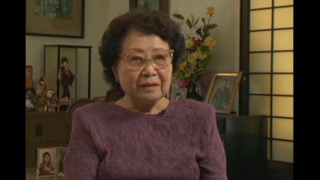
Barbara Kawakami
en
ja
es
pt
Barbara Kawakami

Helping soldiers

An expert researcher and scholar on Japanese immigrant clothing.

en
ja
es
pt
Barbara Kawakami
en
ja
es
pt
Barbara Kawakami

Okinawan discrimination

An expert researcher and scholar on Japanese immigrant clothing.

en
ja
es
pt
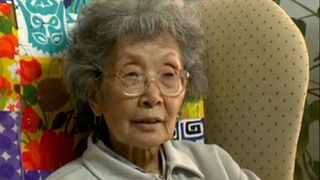
Yuri Kochiyama
en
ja
es
pt
Yuri Kochiyama

Didn't have rights that whites had

(1922–2014) Political and civil rights activist.

en
ja
es
pt
Yuri Kochiyama
en
ja
es
pt
Yuri Kochiyama

Californians didn't know about evacuation

(1922–2014) Political and civil rights activist.

en
ja
es
pt
Yuri Kochiyama
en
ja
es
pt
Yuri Kochiyama

The day Pearl Harbor was bombed

(1922–2014) Political and civil rights activist.

en
ja
es
pt
Yuri Kochiyama
en
ja
es
pt
Yuri Kochiyama

Father as prisoner of war in hospital

(1922–2014) Political and civil rights activist.

en
ja
es
pt
Yuri Kochiyama
en
ja
es
pt
Yuri Kochiyama

Patriotism versus loyalty

(1922–2014) Political and civil rights activist.

en
ja
es
pt
Yuri Kochiyama
en
ja
es
pt
Yuri Kochiyama

Idealism before war, being red, white and blue

(1922–2014) Political and civil rights activist.

en
ja
es
pt
Yuri Kochiyama
en
ja
es
pt
Yuri Kochiyama

Arrest of father

(1922–2014) Political and civil rights activist.

en
ja
es
pt
Yuri Kochiyama
en
ja
es
pt
Yuri Kochiyama

Camp as a positive thing

(1922–2014) Political and civil rights activist.

en
ja
es
pt
Yuri Kochiyama
en
ja
es
pt
Yuri Kochiyama

Rounding up Issei and Nikkei

(1922–2014) Political and civil rights activist.

en
ja
es
pt
Grayce Ritsu Kaneda Uyehara
en
ja
es
pt
Grayce Ritsu Kaneda Uyehara

Importance of education in achieving redress for incarceration

(1919-2014) Activist for civil rights and redress for World War II incarceration of Japanese Americans.

en
ja
es
pt

Discover Nikkei Updates

NIKKEI CHRONICLES #14
Nikkei Family 2: Remembering Roots, Leaving Legacies
Read the stories and give a star to the ones you like the most! Help select our Community Favorite.
Vote for Nima-kai Favorite!
VIRTUAL PROGRAM
Nikkei Uncovered V: a poetry reading
Tuesday, December 9
Hosted by traci kato-kiriyama
Featuring Aaron Caycedo-Kimura, Erica Isomura, and Syd Westley
SUPPORT THE PROJECT
Discover Nikkei’s 20 for 20 campaign celebrates our first 20 years and jumpstarts our next 20. Learn more and donate!