Discover Nikkei Logo

https://www.discovernikkei.org/en/interviews/clips/551/

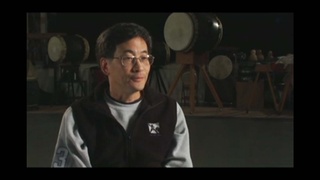
Playing traditional gagaku while creating an identity

When Togi taught our gagaku group, we became proficient enough that they asked us to play at the Olympics at a venue. So we’re outside playing gagakuand so this guy from Japan was watching us – and he assumed we were Japanese because we were playing gagaku. So he came up and said something to Ronnie, one of our members. And Ronnie doesn’t speak Japanese. So he says, “What?” and so this guy did [speak English]. He said, “Oh, you’re American?” And Ronnie said, “Yeah.” And he says, “You can’t play gagaku!” And Ronnie said, “I just did.” And he said, “Oh no, no, gagakuis the soul of Japanese music and you have to be from Japan.” And so Ronnie leaned over and said, “Do you know the piece that we just played? What’s the name of it?” And he didn’t know of course. So Ronnie said, “Get out of my face.”

And that was an important moment because for the first time, a Sansei was saying, “No, this is my music and I know what it is and I don’t need you to tell me what it is by accident of birth.” And that was a pivotal moment for our group. And everyone really felt that. This generation is saying “Whatever we are, this is what we are and we’re not going to be intimidated anymore simply because…by birth.” And ours is different. It is different so that when we go to Japan, we do not expect this in Japan. We expect something very different.


arts drum gagaku identity Japan music taiko

Date: Dec 3, 2004

Location: California, US

Interviewer: Art Hansen, Sojin Kim

Contributed by: Watase Media Arts Center, Japanese American National Museum
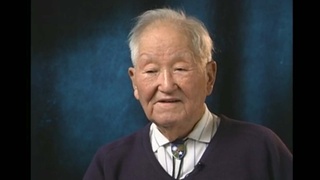
Interviewee Bio

Rev. Masao Kodani is a Sansei minister of Jodo Shinshu Buddhism and co-founder of Kinnara Taiko - the second taiko group established in the United States and the first Japanese American Buddhist group. Born in Glendale, California, Rev. Kodani was a young child when he and his family were incarcerated at Poston Relocation Center in Arizona during WWII. After his family's return toLos Angeles, they lived in a predominantly African American community near the neighborhood of Watts. Although they were Buddhist, his parents sent their children to Evergreen Baptist Church in East L.A. because they thought it would be easier for them to fit in. After graduating from Centennial High School, Reverend Kodani attended the University of California at Santa Barbara where he earned his degree in East Asian Studies. While at UC Santa Barbara, he became close with Reverend Art Takemoto of Nishi Hongwanji Buddhist Temple. Through Rev. Takemoto’s influence, Kodani traveled to Japanto study Buddhism at Ryukoku University. After his studies were completed, he returned to the United States and was assigned to the Senshin Buddhist Temple in South Central Los Angeles. In 1969, he established Kinnara Taiko with members of the temple as a Japanese American Buddhist ensemble with the objective of enjoying the Buddha-Dharma (Horaku)through the experience. Their composition, "Ashura" has become one of the most learned adapted pieces in the American taiko repertory. (December 3, 2004)

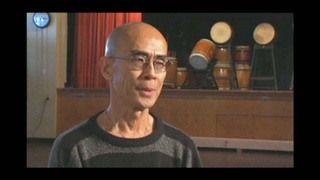
Seiichi Tanaka
en
ja
es
pt
Seiichi Tanaka

Soukou Bayashi: Dedicated to the Issei (Japanese)

(b.1943) Shin-issei grand master of taiko; founded San Francisco Taiko Dojo in 1968.

en
ja
es
pt
Seiichi Tanaka
en
ja
es
pt
Seiichi Tanaka

Handmade taiko (Japanese)

(b.1943) Shin-issei grand master of taiko; founded San Francisco Taiko Dojo in 1968.

en
ja
es
pt
Seiichi Tanaka
en
ja
es
pt
Seiichi Tanaka

Taiko philosophy (Japanese)

(b.1943) Shin-issei grand master of taiko; founded San Francisco Taiko Dojo in 1968.

en
ja
es
pt
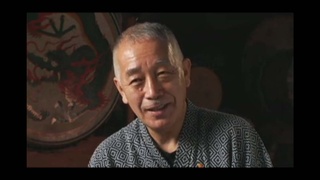
Nosuke Akiyama
en
ja
es
pt
Nosuke Akiyama

Rediscovery of Japanese culture through taiko (Japanese)

Shishimai (Lion dance) and Taiko player with San Francisco Taiko Dojo.

en
ja
es
pt
Nosuke Akiyama
en
ja
es
pt
Nosuke Akiyama

Identifies as Japanese, but home is San Francisco

Shishimai (Lion dance) and Taiko player with San Francisco Taiko Dojo.

en
ja
es
pt
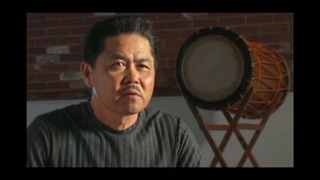
Etsuo Hongo
en
ja
es
pt
Etsuo Hongo

The reason he came to the United States (Japanese)

(1949 - 2019) Taiko player. Founded five taiko groups in Southern California

en
ja
es
pt
Etsuo Hongo
en
ja
es
pt
Etsuo Hongo

First taiko performance in the United States (Japanese)

(1949 - 2019) Taiko player. Founded five taiko groups in Southern California

en
ja
es
pt
Etsuo Hongo
en
ja
es
pt
Etsuo Hongo

Differences in taiko style (Japanese)

(1949 - 2019) Taiko player. Founded five taiko groups in Southern California

en
ja
es
pt
Etsuo Hongo
en
ja
es
pt
Etsuo Hongo

Originality of each taiko group (Japanese)

(1949 - 2019) Taiko player. Founded five taiko groups in Southern California

en
ja
es
pt
Etsuo Hongo
en
ja
es
pt
Etsuo Hongo

Benefits of living in the United States (Japanese)

(1949 - 2019) Taiko player. Founded five taiko groups in Southern California

en
ja
es
pt
Etsuo Hongo
en
ja
es
pt
Etsuo Hongo

Promoting group identity through taiko contests (Japanese)

(1949 - 2019) Taiko player. Founded five taiko groups in Southern California

en
ja
es
pt
Etsuo Hongo
en
ja
es
pt
Etsuo Hongo

Taiko's sounds as Japanese cultural tradition (Japanese)

(1949 - 2019) Taiko player. Founded five taiko groups in Southern California

en
ja
es
pt
Richard Kosaki
en
ja
es
pt
Richard Kosaki

Growing up in Waikiki

(b. 1924) Political scientist, educator, and administrator from Hawai`i

en
ja
es
pt
Roger Shimomura
en
ja
es
pt
Roger Shimomura

Depicting issues of ethnic identity through childhood artwork

(b. 1939) Japanese American painter, printmaker & professor

en
ja
es
pt
Frank Yamasaki
en
ja
es
pt
Frank Yamasaki

Starting over after the war: denial of all things Japanese

(b. 1923) Nisei from Washington. Resisted draft during WWII.

en
ja
es
pt

Discover Nikkei Updates

NIMA VOICES
Episode 19
Guest host Tamlyn Tomita chatted with actor Christopher Sean in the latest episode of Nima Voices about his background, acting, and community involvement.
WATCH NOW!
NIKKEI CHRONICLES #14
Nikkei Family 2: Remembering Roots, Leaving Legacies
Find out which stories were selected as the Editorial Committee and Nima-kai Community Favorites!
SUPPORT THE PROJECT
Discover Nikkei’s 20 for 20 campaign celebrates our first 20 years and jumpstarts our next 20. Learn more and donate!