Discover Nikkei Logo

https://www.discovernikkei.org/en/interviews/clips/829/

Traditional Japanese events for Japanese Americans (Japanese)

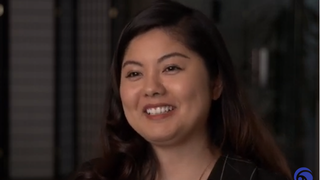
(Japanese) To me, Nikkei people are Americans, and I feel like they don’t know much about Japan. It just seems like they have a sense of nostalgia about the culture of Japan. So that might show up in the form of Oshogatsu (New Years) celebrations or Obon festivals. One time, a Nikkei family invited me to Oshogatsu, so I went, and honestly I was expecting some Osechi Ryori (traditional Japanese New Year’s cuisine). But instead, there was tempura. They had prepared this mass of tempura [laughs]. “Ah,” I realized, “so this is Oshogatsu for Japanese Americans.” There wasn’t but a trace of anything resembling Osechi Ryori. But I understand that for them, they had done their best in preparing the food. Anyway, I don’t really remember if there was Japanese sake, or some mochi, but I do remember that we had sushi. Of course, no one in Japan really eats sushi on New Years. But it made me think that maybe they [the Japanese Americans] are longing for this kind of special Japanese event, to try and get a taste of tradition and culture.


culture New Year Nikkei Oshogatsu traditions United States

Date: Mar 1, 2007

Location: California, US

Interviewer: Yoko Nishimura

Contributed by: Watase Media Arts Center, Japanese American National Museum

Interviewee Bio

Yumi Matsubara was born and grew up in Gifu prefecture in Japan. Growing up in a conservative family in Japan, she didn’t tell her parents that she was moving to Los Angeles, California, to improve her English. She first attended an English language school for a couple of months before studying fashion at the Fashion Institute of Design & Merchandising (FIDM) in Los Angeles. After she graduated from FIDM in 1994, she started working in the fashion industry.

Around this time, her desire to make a permanent home in the United States was growing. Her company agreed to support her green card (permanent residency), so she started the green card process. In 1999, however, the financial situation of her company deteriorated and she left the company before she received her U.S. permanent residency. She decided to marry an American citizen in November 1999 after just two weeks of dating. She received her green card in May 2001 and her American citizenship in December 2006. Currently, she works in the fashion industry in Los Angeles where she serves as a grader* and spec writer. (March 1, 2007)

* Grader: a person who produces scaled versions of an original pattern to produce clothes across a range of sizes and fits.

Clifford Uyeda
en
ja
es
pt
Clifford Uyeda

Mentality of Issei and Nisei

(1917 - 2004) Political activist

en
ja
es
pt
Kazuomi Takagi
en
ja
es
pt
Kazuomi Takagi

Generational Gap (Spanish)

(1925-2014) La Plata Hochi, Journalist

en
ja
es
pt
Kazuomi Takagi
en
ja
es
pt
Kazuomi Takagi

Nikkei identity (Spanish)

(1925-2014) La Plata Hochi, Journalist

en
ja
es
pt

Discover Nikkei Updates

NIKKEI CHRONICLES #14
Nikkei Family 2: Remembering Roots, Leaving Legacies
Read the stories and give a star to the ones you like the most! Help select our Community Favorite.
Vote for Nima-kai Favorite!
VIRTUAL PROGRAM
Nikkei Uncovered V: a poetry reading
Tuesday, December 9
Hosted by traci kato-kiriyama
Featuring Aaron Caycedo-Kimura, Erica Isomura, and Syd Westley
SUPPORT THE PROJECT
Discover Nikkei’s 20 for 20 campaign celebrates our first 20 years and jumpstarts our next 20. Learn more and donate!