
Interviews
Lack of taiko at Cherry Blossom Festival
First time, I saw the parade at that Japantown. I think dancers. Kimono, beautiful kimono, and walking nicely. So two nights, no noise. So, my town, when I was young, the taiko is very…only popular. So I always interested. And taiko, when they play, they move me. So that experience, through that experience, the Cherry Blossom Festival wasn’t exactly that festival feeling. So my friend also there, fresh off the boat—all fresh off the boat people get together—“Let’s make a Japanese festival.” Then my friend made a omikoshi, carry the mikoshi. Then I played drum to make noise just like a Japanese festival. That’s the beginning. I started 1968, Autumn festival. Parade and Japan Center area, I put it all over the place.
Date: January 27, 2005
Location: California, US
Interviewer: Art Hansen, Sojin Kim
Contributed by: Watase Media Arts Center, Japanese American National Museum.
Explore More Videos
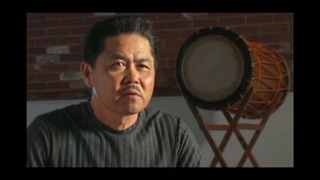
Benefits of living in the United States (Japanese)
(1949 - 2019) Taiko player. Founded five taiko groups in Southern California
Promoting group identity through taiko contests (Japanese)
(1949 - 2019) Taiko player. Founded five taiko groups in Southern California
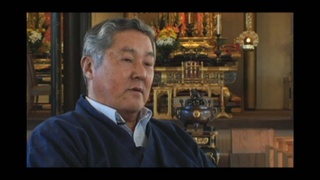
Changing the taiko rhythm from Japanese to Afro-Cuban
Senshin Buddhist Temple minister and co-founder of Kinnara Taiko.
Friction between Sensei and Kinnara in defining taiko
Senshin Buddhist Temple minister and co-founder of Kinnara Taiko.
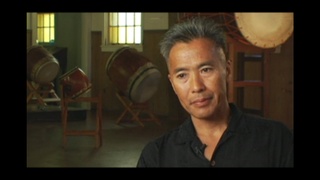
Collaborating with non-taiko groups
(b.1952) Master drummer, artistic director of the Taiko Center of the Pacific
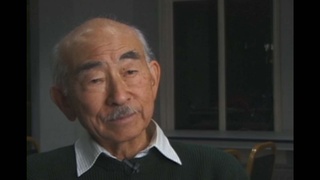
Involvement in Nikkei community in New York City
(1915 - 2011) Nisei florist who resettled in New York City after WW II. Active in Japanese American civil rights movement
American influences on Japanese taiko
Senshin Buddhist Temple minister and co-founder of Kinnara Taiko.
Taiko is a reflection of where you live
Senshin Buddhist Temple minister and co-founder of Kinnara Taiko.
Playing traditional gagaku while creating an identity
Senshin Buddhist Temple minister and co-founder of Kinnara Taiko.
Taiko as self-expression
Co-founder and creative director of San Jose Taiko
A “principally-based” taiko group in England creating a global taiko community
Co-founder and creative director of San Jose Taiko
East First Street the hub of Japanese American community
(b. 1934) Writer
Defining a Taiko player
(b.1951) Co-founder and managing director of San Jose Taiko.
Japanese American taiko is not Japanese taiko
(b. 1949) Musician and arts educator and adminstrator.
Parents didn't accept me playing taiko in the beginning
(b. 1949) Musician and arts educator and adminstrator.


