Discover Nikkei Logo

https://www.discovernikkei.org/en/interviews/clips/430/

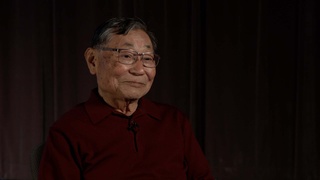
Starting an import business after World War II

Right after the war ended and coming back and then I decided well, I guess we’ve got to do some kind of business, so I started this wholesale business selling California ceramics because in California, there were lots of little potters, pottery factories. And sold that pottery and brought it in from California and I did the business in the basement of our house. And I did all the packing, the invoicing, collection and found salesmen.

Then I started importing and I started importing English bone china cups and saucers. They were…people…a fad at that time of people wanting…collecting bone china cups and saucers and they were very scarce, by the way, because there was no importation during the war. The reason why I started is…is that one of my salesmen from Utah – Mr. Debonham – his name was Shirley Debonham. He told me that people were asking for English bone china cups and saucers. So I said, “That’s great.” So I went to the library, found the list of all the potteries in England, and wrote letters to them. I thought, “Well, maybe I might get one to sell to me.” Five said they would ship to me and so it started. And so I sold just…I couldn’t get enough… And I started selling all over the United States. And started there.

And then finally moved to a small warehouse place in downtown Portland and grew from there. So that was…and then we changed the name to “Norcrest China Company” and we were…started importing from Japan. And we imported the goods…early on was…we had to put down “Made in US Occupied Japan.”


business economics imports management

Date: Dec 8, 2005

Location: Oregon, US

Interviewer: Akemi Kikumura Yano

Contributed by: Watase Media Arts Center, Japanese American National Museum.
Interviewee Bio

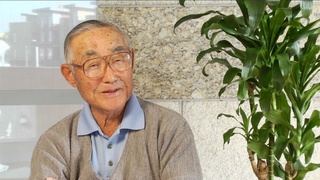
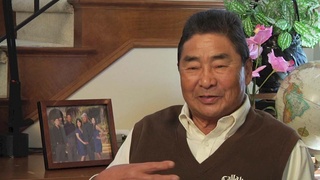
Sam Naito (b. 1921) is President and Chief Executive Officer of the Naito Corporation in Portland, Oregon. In 1975 he established Made In Oregon, a store based at the Portland International Airport dedicated to merchandising "products made, caught or grown in Oregon." Made In Oregon has since grown to 10 store locations in Portland, Salem, Eugene and Newport. Sam's father came to the United States (by way of England) around 1917 from a small town near Kobe, Japan. The family opened an importing business in Portland in 1921, but with the outbreak of World War II, the family faced discriminatory city ordinances and other forms of racial prejudice. In 1942, the president of the University of Oregon denied Sam's request to finish his spring term, stating that it would be "unpatriotic" to allow him to do so. The family decided to move to Salt Lake City, Utah, to join other family relatives. Sam worked and attended University of Utah where he met his future wife. He eventually graduated from Columbia University in New York in 1945 and, after the war, started a wholesale ceramics business that became Norcrest China Co., an importer of fine china and dinnerware both from England and "Occupied Japan." (December 8, 2005)

Harunori Oda
en
ja
es
pt
Harunori Oda

Learning the nursery business

(1927-2016) Shin-Issei businessman

en
ja
es
pt
Harunori Oda
en
ja
es
pt
Harunori Oda

Gardening to nursery

(1927-2016) Shin-Issei businessman

en
ja
es
pt
Harunori Oda
en
ja
es
pt
Harunori Oda

Expanding business

(1927-2016) Shin-Issei businessman

en
ja
es
pt
Harunori Oda
en
ja
es
pt
Harunori Oda

Next phase

(1927-2016) Shin-Issei businessman

en
ja
es
pt
Harunori Oda
en
ja
es
pt
Harunori Oda

Life Philosophy

(1927-2016) Shin-Issei businessman

en
ja
es
pt
Jimmy Ko Fukuhara
en
ja
es
pt
Jimmy Ko Fukuhara

Family nursery business

(b. 1921) Nisei veteran who served in the occupation of Japan

en
ja
es
pt
Jimmy Ko Fukuhara
en
ja
es
pt
Jimmy Ko Fukuhara

After being discharged and returning to the nursery business

(b. 1921) Nisei veteran who served in the occupation of Japan

en
ja
es
pt
Hachiro Ohtomo
en
ja
es
pt
Hachiro Ohtomo

Business in Missouri (Japanese)

(b. 1936) Shin-issei welding business owner

en
ja
es
pt
Antonio Shinkiti Shikota
en
ja
es
pt
Antonio Shinkiti Shikota

3.11 Earthquake stopped his business in Sendai and Fukushima (Portuguese)

(b. 1962) Japanese Brazilian owner of a Brazilian products store in Japan.

en
ja
es
pt
Antonio Shinkiti Shikota
en
ja
es
pt
Antonio Shinkiti Shikota

Transition from a factory worker to starting his own business (Portuguese)

(b. 1962) Japanese Brazilian owner of a Brazilian products store in Japan.

en
ja
es
pt
Robert T. Fujioka
en
ja
es
pt
Robert T. Fujioka

Great grandparents' hotel business in Hawaii

(b. 1952) Former banking executive, born in Hawaii

en
ja
es
pt
Robert T. Fujioka
en
ja
es
pt
Robert T. Fujioka

Grandfather's business in Hawaii while in camp

(b. 1952) Former banking executive, born in Hawaii

en
ja
es
pt
Robert T. Fujioka
en
ja
es
pt
Robert T. Fujioka

Grandfather helping administration in camp

(b. 1952) Former banking executive, born in Hawaii

en
ja
es
pt
Robert T. Fujioka
en
ja
es
pt
Robert T. Fujioka

Entering banking business

(b. 1952) Former banking executive, born in Hawaii

en
ja
es
pt
Tom Yuki
en
ja
es
pt
Tom Yuki

Father's business partner operated their farming business during WWII

(b. 1935) Sansei businessman.

en
ja
es
pt

Discover Nikkei Updates

NIKKEI CHRONICLES #14
Nikkei Family 2: Remembering Roots, Leaving Legacies
Read the stories and give a star to the ones you like the most! Help select our Community Favorite.
Vote for Nima-kai Favorite!
VIRTUAL PROGRAM
Nikkei Uncovered V: a poetry reading
Tuesday, December 9
Hosted by traci kato-kiriyama
Featuring Aaron Caycedo-Kimura, Erica Isomura, and Syd Westley
SUPPORT THE PROJECT
Discover Nikkei’s 20 for 20 campaign celebrates our first 20 years and jumpstarts our next 20. Learn more and donate!