Discover Nikkei Logo

https://www.discovernikkei.org/en/interviews/clips/1688/

Expressing herself through poetry

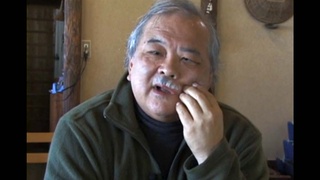
I have never stopped writing from the time I was quite young. And I think it – I was very shy, you know, child. I think that Asians – many Asian Americans – not able to really express yourself verbally, and so you’re always kind of writing and keeping it within yourself, and I think that that probably has helped a lot. And – and so it kind of surprises people when they read my poetry, because they’re kind of sharp, ironic, sometimes quite pointedly critical, and so forth. They don’t – had no idea that I was harboring these thoughts in my head [laughs].


identity literature poetry poets

Date: Aug 7, 2018

Location: California, US

Interviewer: Sharon Yamato

Contributed by: Watase Media Arts Center, Japanese American National Museum
Interviewee Bio

Mitsuye Yamada was born in 1923 while her mother was visiting family in Japan. She grew up in Seattle, Washington until World War II when they were sent to Minidoka, Idaho. A Quaker volunteer helped her to leave camp by finding her a job in Cincinnati, Ohio. Yamada attended the University of Cincinnati and earned a BA from New York University and an MA from the University of Chicago.

She was able to become a naturalized U.S. citizen following passage of the McCarran-Walter Immigration Act and received her citizenship in 1955.

She was a constant writer from the time she was young, and her first book of poetry taken from her writings in Minidoka, Camp Notes and Other Poems, was published in 1976. She started teaching and published more books after a health scare when she was 39 years old.

She helped to start a human rights group in Irvine, California that eventually led to her becoming elected to the Amnesty International Board of Directors in the 1980s and has been active in many human rights causes, especially known for her activism for woman's rights. (August 2018)

Jane Aiko Yamano
en
ja
es
pt
Jane Aiko Yamano

Having patience in Japan, being both

(b.1964) California-born business woman in Japan. A successor of her late grandmother, who started a beauty business in Japan.

en
ja
es
pt
Jane Aiko Yamano
en
ja
es
pt
Jane Aiko Yamano

Acculturation

(b.1964) California-born business woman in Japan. A successor of her late grandmother, who started a beauty business in Japan.

en
ja
es
pt
Jane Aiko Yamano
en
ja
es
pt
Jane Aiko Yamano

Preserving traditional Japanese culture

(b.1964) California-born business woman in Japan. A successor of her late grandmother, who started a beauty business in Japan.

en
ja
es
pt
Jane Aiko Yamano
en
ja
es
pt
Jane Aiko Yamano

Japanese are more accustomed to foreigners

(b.1964) California-born business woman in Japan. A successor of her late grandmother, who started a beauty business in Japan.

en
ja
es
pt
Wakako Nakamura Yamauchi
en
ja
es
pt
Wakako Nakamura Yamauchi

Her experience as a Japanese-American schoolchild in Oceanside, California, after the bombing of Pearl Harbor

(1924-2018) Artist and playwright.

en
ja
es
pt
Wayne Shigeto Yokoyama
en
ja
es
pt
Wayne Shigeto Yokoyama

Food growing up

(b.1948) Nikkei from Southern California living in Japan.

en
ja
es
pt
Wayne Shigeto Yokoyama
en
ja
es
pt
Wayne Shigeto Yokoyama

Being on the outside

(b.1948) Nikkei from Southern California living in Japan.

en
ja
es
pt
Wally Kaname Yonamine
en
ja
es
pt
Wally Kaname Yonamine

Returning to Maui during baseball off-seasons to remind himself of the hard work required to succeed

(b.1925) Nisei of Okinawan descent. Had a 38-year career in Japan as a baseball player, coach, scout, and manager.

en
ja
es
pt
Wally Kaname Yonamine
en
ja
es
pt
Wally Kaname Yonamine

His parents' experience with Japanese resistance toward intermarriage with Okinawans

(b.1925) Nisei of Okinawan descent. Had a 38-year career in Japan as a baseball player, coach, scout, and manager.

en
ja
es
pt
Wally Kaname Yonamine
en
ja
es
pt
Wally Kaname Yonamine

Working in cane fields as teenager, and how it helped in his athletic training (Japanese)

(b.1925) Nisei of Okinawan descent. Had a 38-year career in Japan as a baseball player, coach, scout, and manager.

en
ja
es
pt
Roy H. Matsumoto
en
ja
es
pt
Roy H. Matsumoto

Nickname

(b.1913) Kibei from California who served in the MIS with Merrill’s Marauders during WWII.

en
ja
es
pt
Roy H. Matsumoto
en
ja
es
pt
Roy H. Matsumoto

Feelings of loyalty to America while in Japan

(b.1913) Kibei from California who served in the MIS with Merrill’s Marauders during WWII.

en
ja
es
pt
Roy H. Matsumoto
en
ja
es
pt
Roy H. Matsumoto

Mixed emotions after declaration of war on Japan

(b.1913) Kibei from California who served in the MIS with Merrill’s Marauders during WWII.

en
ja
es
pt
Nosuke Akiyama
en
ja
es
pt
Nosuke Akiyama

Identifies as Japanese, but home is San Francisco

Shishimai (Lion dance) and Taiko player with San Francisco Taiko Dojo.

en
ja
es
pt
Richard Kosaki
en
ja
es
pt
Richard Kosaki

Growing up in Waikiki

(b. 1924) Political scientist, educator, and administrator from Hawai`i

en
ja
es
pt

Discover Nikkei Updates

NIMA VOICES
Episode 19
Guest host Tamlyn Tomita chatted with actor Christopher Sean in the latest episode of Nima Voices about his background, acting, and community involvement.
WATCH NOW!
NIKKEI CHRONICLES #14
Nikkei Family 2: Remembering Roots, Leaving Legacies
Find out which stories were selected as the Editorial Committee and Nima-kai Community Favorites!
SUPPORT THE PROJECT
Discover Nikkei’s 20 for 20 campaign celebrates our first 20 years and jumpstarts our next 20. Learn more and donate!