Discover Nikkei Logo

https://www.discovernikkei.org/en/interviews/clips/1686/

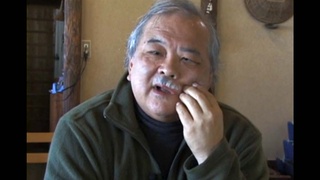
Her brother’s reasons as a No-No Boy

He had answered “No” to those two questions, because he said, “No, I’m a pacifist, I don’t believe in killing, and therefore I wouldn’t bear arms under any circumstances,” and the second, he said, “No, because I didn’t swear allegiance to the emperor of Japan in the first place, and so why should I forswear allegiance?” And so he answered “No” to the questions. And – as I said, apparently, nobody read the questionnaires after – we had left camp anyway.

So about a year – we were in Cincinnati for about a year, at University of Cincinnati, and the FBI came to his rooming house to ask him, with a copy of his questionnaire, to – if he would change his answers to “Yes.” And I remember Mike said he – said, “No,” he wasn’t gonna change it. And – and I remember yelling at him, I said, “What? Are you crazy?”

Of course he was expelled from the school. Because…the school – well he wasn’t expelled actually; they said that they were doing “sensitive war work on campus,” and therefore, the campus was “off-limits” to him. And so then he was not able to take his final exams at the end of his first year. And so then he failed all his classes. And so then he immediately – he left Cincinnati to go to Boston – he graduated from Boston University later.


education loyalty questionnaire no-no boys World War II

Date: Aug 7, 2018

Location: California, US

Interviewer: Sharon Yamato

Contributed by: Watase Media Arts Center, Japanese American National Museum
Interviewee Bio

Mitsuye Yamada was born in 1923 while her mother was visiting family in Japan. She grew up in Seattle, Washington until World War II when they were sent to Minidoka, Idaho. A Quaker volunteer helped her to leave camp by finding her a job in Cincinnati, Ohio. Yamada attended the University of Cincinnati and earned a BA from New York University and an MA from the University of Chicago.

She was able to become a naturalized U.S. citizen following passage of the McCarran-Walter Immigration Act and received her citizenship in 1955.

She was a constant writer from the time she was young, and her first book of poetry taken from her writings in Minidoka, Camp Notes and Other Poems, was published in 1976. She started teaching and published more books after a health scare when she was 39 years old.

She helped to start a human rights group in Irvine, California that eventually led to her becoming elected to the Amnesty International Board of Directors in the 1980s and has been active in many human rights causes, especially known for her activism for woman's rights. (August 2018)

George Ariyoshi
en
ja
es
pt
George Ariyoshi

Teacher who helped with lisp

(b.1926) Democratic politician and three-term Governor of Hawai'i

en
ja
es
pt
George Ariyoshi
en
ja
es
pt
George Ariyoshi

Prom during the war

(b.1926) Democratic politician and three-term Governor of Hawai'i

en
ja
es
pt
George Ariyoshi
en
ja
es
pt
George Ariyoshi

Influence of veterans

(b.1926) Democratic politician and three-term Governor of Hawai'i

en
ja
es
pt
Jean Hayashi Ariyoshi
en
ja
es
pt
Jean Hayashi Ariyoshi

Day Pearl Harbor was bombed

Former First Lady of Hawai'i

en
ja
es
pt
Kazuo Funai
en
ja
es
pt
Kazuo Funai

Japan vs. the United States (Japanese)

(1900-2005) Issei businessman

en
ja
es
pt
Kazuo Funai
en
ja
es
pt
Kazuo Funai

Company in Tokyo burned down (Japanese)

(1900-2005) Issei businessman

en
ja
es
pt
James Hirabayashi
en
ja
es
pt
James Hirabayashi

Little interaction with parents

(1926 - 2012) Scholar and professor of anthropology. Leader in the establishment of ethnic studies as an academic discipline

en
ja
es
pt
James Hirabayashi
en
ja
es
pt
James Hirabayashi

Life in camp as teenager

(1926 - 2012) Scholar and professor of anthropology. Leader in the establishment of ethnic studies as an academic discipline

en
ja
es
pt
James Hirabayashi
en
ja
es
pt
James Hirabayashi

Politics in ethnic studies

(1926 - 2012) Scholar and professor of anthropology. Leader in the establishment of ethnic studies as an academic discipline

en
ja
es
pt
James Hirabayashi
en
ja
es
pt
James Hirabayashi

Center for Japanese American Studies in community

(1926 - 2012) Scholar and professor of anthropology. Leader in the establishment of ethnic studies as an academic discipline

en
ja
es
pt
James Hirabayashi
en
ja
es
pt
James Hirabayashi

Involvement with ethnic studies

(1926 - 2012) Scholar and professor of anthropology. Leader in the establishment of ethnic studies as an academic discipline

en
ja
es
pt
James Hirabayashi
en
ja
es
pt
James Hirabayashi

Testing assumptions of Japanese scholars

(1926 - 2012) Scholar and professor of anthropology. Leader in the establishment of ethnic studies as an academic discipline

en
ja
es
pt
Robert Katayama
en
ja
es
pt
Robert Katayama

Being ordered to keep a diary that was later confiscated, ostensibly by the FBI

Hawaiian Nisei who served in World War II with the 442nd Regimental Combat Team.

en
ja
es
pt
Barbara Kawakami
en
ja
es
pt
Barbara Kawakami

Kids working hard

An expert researcher and scholar on Japanese immigrant clothing.

en
ja
es
pt
Barbara Kawakami
en
ja
es
pt
Barbara Kawakami

Bombing of Pearl Harbor

An expert researcher and scholar on Japanese immigrant clothing.

en
ja
es
pt

Discover Nikkei Updates

NIKKEI CHRONICLES #14
Nikkei Family 2: Remembering Roots, Leaving Legacies
Read the stories and give a star to the ones you like the most! Help select our Community Favorite.
Vote for Nima-kai Favorite!
VIRTUAL PROGRAM
Nikkei Uncovered V: a poetry reading
Tuesday, December 9
Hosted by traci kato-kiriyama
Featuring Aaron Caycedo-Kimura, Erica Isomura, and Syd Westley
SUPPORT THE PROJECT
Discover Nikkei’s 20 for 20 campaign celebrates our first 20 years and jumpstarts our next 20. Learn more and donate!