|
||
 Enlarge
|
Licensing | |
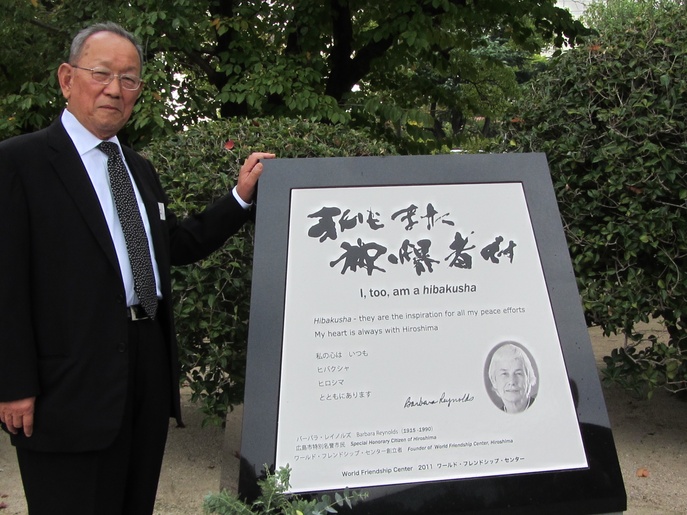
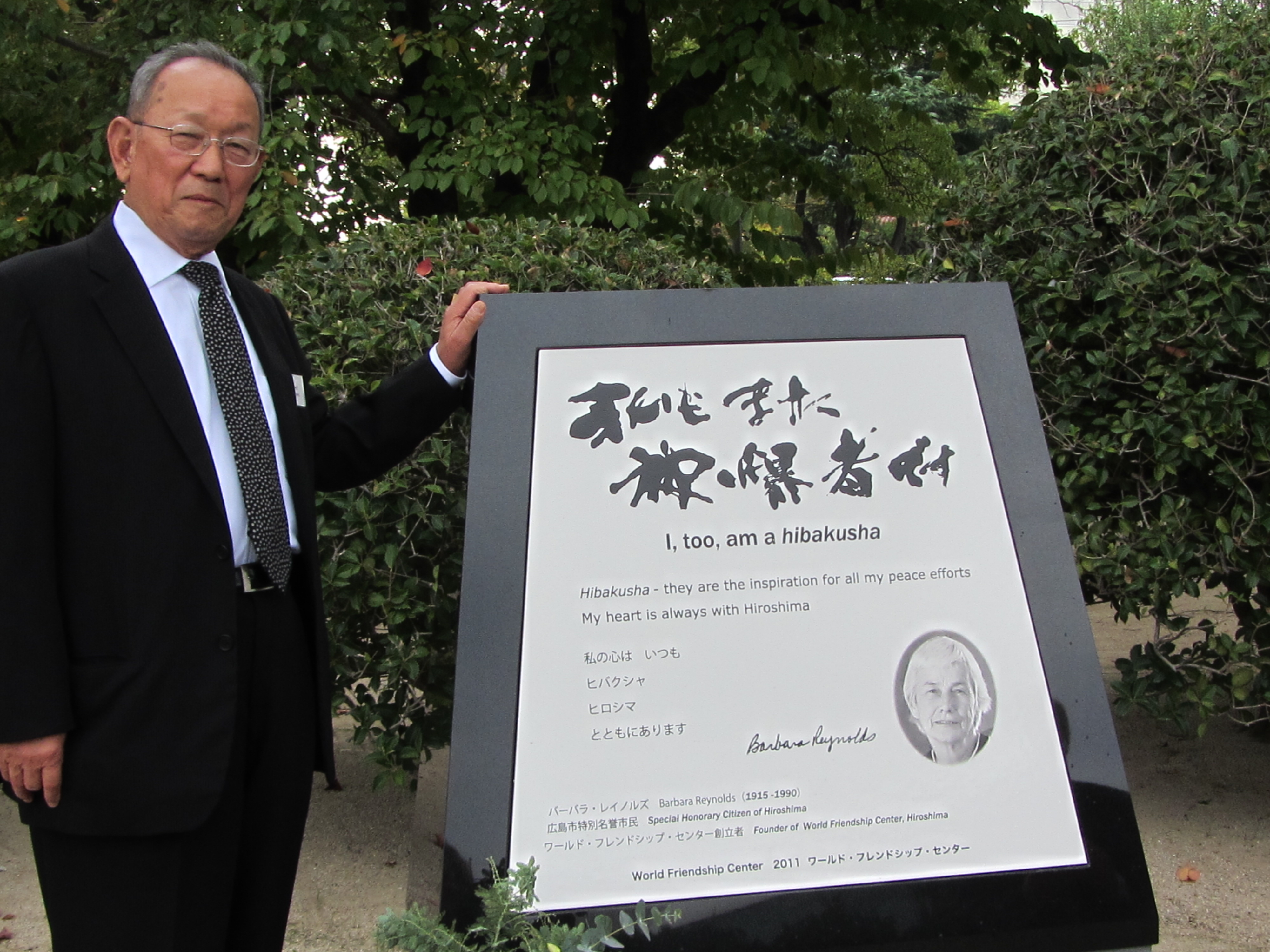
Fred is a hibakusha. Before the outbreak of World War II, he moved to Hiroshima with his family from Hawaii. After the war, he returned to the United States to pursue his education. Fred has family living in the Hiroshima area.
Fred Hasegawa was 15. His parents had immigrated to Maui Hawaii, where he was born. His father had worked in the cane fields and owned the Hasegawa general store on Maui before retiring in 1933 and moving the family back home to Japan.
There were 250 students in Hasegawa's high school class. School had been closed, but every morning the students took a train from the outskirts of Hiroshima, where they lived, into the city to work for civil defense - half in a weapons factory, assembling parts, and half tearing down houses to cut a fire lane through the city in case of a B-29 attack.
On Aug. 6, Hasegawa found the weapons factory closed because some necessary parts hadn't arrived. He and the other factory students were told to take the train and join their classmates on the fire lanes.
The bomb hit suddenly. One moment they were standing on the train platform. The next a blinding light shattered the morning sun and a cloud of dust seemed to put it out. Hasegawa was knocked to the ground by the concussion.
"I didn't know what had happened. We had natural gas tanks, and I thought maybe they had blown up. I crawled behind a building. I couldn't hear anything. My hearing was gone in the explosion. There was dust everywhere, and I couldn't see anything. I only wanted to go home."
By the time Hasegawa gathered himself to start walking toward home, what little was left of the city was in flames.
Hasegawa skirted the inner city and walked around the bay.
Hasegawa was lucky. The train station was three miles from ground zero. He wasn't badly injured, and no one in his family was killed.
Hasegawa returned to the United States to graduate from the University of Washington. Every other year, a group of doctors from a joint Japanese-U.S. research foundation comes from Japan to study them and others from Oregon and British Columbia.
 mhomma
—
Last modified Jun 20 2016 10:10 a.m.
mhomma
—
Last modified Jun 20 2016 10:10 a.m.
Part of these albums

|
The Schmoe House, Houses for Hiroshima Project, Grand Opening Ceremony - Hiroshima, Japan
mhomma
|

|
 Amache Stories and Memories
 The Schmoe House, Houses for Hiroshima Project, Grand Opening Ceremony - Hiroshima, Japan
 May 2011 Japan Tsunami Relief Mission trip & Follow up visit in Oct 2012
 Baptist Churches in Pre-WWII Imperial Japan
 Moneta / Gardena Valley Baptist Church (1930-1940)
 Heart Mountain Photos from Michihiko Wada
 Incarceration Years: Lordsburg/Santa Fe, Seagoville, Amache Camp Photos and DOJ Documents


 Journal feed