Discover Nikkei Logo

https://www.discovernikkei.org/en/interviews/clips/978/

Poignant story from the CWRIC hearing in San Francisco

The most impressive part was the group of Issei women that was brought here by bus to testify. They all spoke in Japanese, but they told about their personal story—what happened to them. And I still recall one story to this day. It’s still vivid in my mind.

She said that the FBI came to take her husband away. He was out in the field still working. They waited for him to come home and they would not even let him have his supper or change his clothing. They took him directly, and she didn’t even know where he was and it took almost two days to find him. It turns out that he was incarcerated in local jail in San Jose. So, she went over there, and the guard said, you cannot speak Japanese, you have to speak only English. Her English was not very good, she said, and her kids, she brought her two kids with her. But they were too young to do the interpreting, so, mostly through sign language, the husband finally convinced her that what he wanted was a change of clothing. So, she said she went home, got them. He was still in his boots at the time. So she brought the change of clothing back to the jail, but when she got there, he was gone. She said that she did not know where he was for a long time. Finally, he was in one of the internment camps, I think he was in Missoula, Montana, someplace in that area. But it was many, many months later that she found out where he was.


Commission on Wartime Relocation and Internment of Civilians hearings

Date: Jul 1, 1998

Location: California, US

Interviewer: Mitchell Maki, Darcie Iki

Contributed by: Watase Media Arts Center, Japanese American National Museum
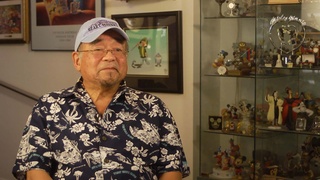
Interviewee Bio

Clifford Uyeda was born on January 14, 1917, into a family of oyster farmers in Olympia, Washington. Uyeda studied at the University of Wisconsin and from 1941 to 1945 attended Tulane University Medical School in New Orleans, LA. Uyeda went on to become a medical doctor in San Francisco, CA.

Uyeda became involved in the Japanese American Citizens League (JACL) in 1960 when he served as San Francisco Chapter chair of the Issei Oral History Project. He helped in establishing the School of Ethnic Studies at San Francisco State University and played an important role in restoring the U.S. citizenship and presidential pardon of Iva Toguri, also known as “Tokyo Rose.”

After retiring from medicine in 1975, Uyeda became a full-time activist. In 1977, Uyeda served as National JACL chair of the Japanese American Incarceration for Redress committee. He was elected to serve as president of National JACL from 1978 to 1980. Uyeda continued to serve the community in various roles until his death from cancer in 2004 at the age of 87. (April 11, 2008)

Chiye Tomihiro
en
ja
es
pt
Chiye Tomihiro

Too Ashamed to Tell

Chaired the Chicago JACL's Redress Committee.

en
ja
es
pt
William Marutani
en
ja
es
pt
William Marutani

Recalling Pinedale and Tule Lake concentration camps

Judge, only Japanese American to serve on CWRIC.

en
ja
es
pt
William Marutani
en
ja
es
pt
William Marutani

A memorable CWRIC testimony of an unjust situation

Judge, only Japanese American to serve on CWRIC.

en
ja
es
pt

Discover Nikkei Updates

NIMA VOICES
Episode 19
Guest host Tamlyn Tomita chatted with actor Christopher Sean in the latest episode of Nima Voices about his background, acting, and community involvement.
WATCH NOW!
VIRTUAL PROGRAM
Nikkei Uncovered V: a poetry reading
Tuesday, December 9
Hosted by traci kato-kiriyama. Featuring Aaron Caycedo-Kimura, Erica Isomura, and Syd Westley
SUPPORT THE PROJECT
Discover Nikkei’s 20 for 20 campaign celebrates our first 20 years and jumpstarts our next 20. Learn more and donate!