Discover Nikkei Logo

https://www.discovernikkei.org/en/interviews/clips/1601/

Growing up Japanese in Hawaii

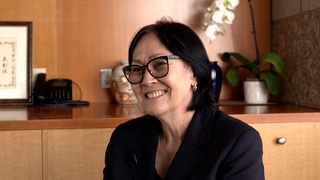
I think that’s the thing, we were so insulated in Hawaii, and just as a culture, I mean Asians comprise like 2/3rds of the population, so you never felt uncomfortable. In fact I think Hawaii is the only place where the minorities feel superior to the Caucasians. And I mean Superior with a capital S, maybe foolishly because if you measure it in terms of economics, just pure dollars, the Caucasians are probably still wealthier per capita. But in terms of feeling discriminated against, certainly not in Hawaii. And that’s why I always felt that when I met Japanese Americans on the mainland, they were still holding back, they still felt like a minority, whereas people from Hawaii act too brash and too cocky. But that’s the way your attitude is because you grow up in an Asian majority situation, which doesn’t exist anywhere else.

There are people on the mainland who say, oh we’re colorblind. Doesn’t matter what color or race you are, we look at people as being equal. And I go, you know that’s… we’re still way shorter of where it should be. I said you should recognize all colors. You should appreciate all colors. And in Hawaii we all joke about other people’s ethnicity. I mean full on jokes, hardcore jokes, and we all laugh about it. Until you get to the point where you can laugh about your ethnicity, I don’t think you’re there. People just take things too personally. And colorblind is not what you want, it’s color appreciative is what you want. That’s the thing about Hawaii.


Hawai'i identity minorities race United States

Date: Apr 25, 2018

Location: California, US

Interviewer: John Esaki

Contributed by: Watase Media Arts Center, Japanese American National Museum
Interviewee Bio

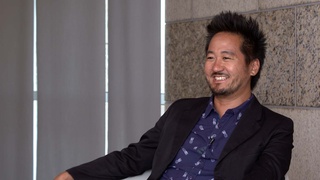
Robert Fujioka was born in Honolulu, Hawaii in 1952. He attended the University of Michigan earning a BA degree and earned an MBA from the University of Hawai'i. He has been in the banking industry since 1974 and currently serves as Vice Chair, Japanese American National Museum Board of Trustees, a Trustee of the Clarence T.C. Ching Foundation, and the First Hawaiian Bank Foundation. (November 2018)
Margaret Oda
en
ja
es
pt
Margaret Oda

Victory Corps Work during World War II

(1925 - 2018) Nisei educator from Hawai‘i

en
ja
es
pt
Roberto Hirose
en
ja
es
pt
Roberto Hirose

From the "middle" Nikkei (Spanish)

(b. 1950) Nisei Chilean, Businessman

en
ja
es
pt
George Yoshida
en
ja
es
pt
George Yoshida

We’re Still Japanese

(b. 1922) Musician

en
ja
es
pt
William Marutani
en
ja
es
pt
William Marutani

Childhood shame for being Nikkei in Enumclaw, Washington

Judge, only Japanese American to serve on CWRIC.

en
ja
es
pt
Kathryn Doi Todd
en
ja
es
pt
Kathryn Doi Todd

On the Impact of the Camp Experience

(b. 1942) The first Asian American woman judge

en
ja
es
pt
Johnny Mori
en
ja
es
pt
Johnny Mori

Thoughts on the term, "Nikkei"

(b. 1949) Musician and arts educator and adminstrator.

en
ja
es
pt
Lou Kitashima
en
ja
es
pt
Lou Kitashima

Changing demography of gardeners in Southern California

Sansei Gardener (1940 - 2025)

en
ja
es
pt
William Marutani
en
ja
es
pt
William Marutani

Post-redress future of Japanese Americans

Judge, only Japanese American to serve on CWRIC.

en
ja
es
pt
Clifford Uyeda
en
ja
es
pt
Clifford Uyeda

Mentality of Issei and Nisei

(1917 - 2004) Political activist

en
ja
es
pt
Clifford Uyeda
en
ja
es
pt
Clifford Uyeda

Treatment by Chinese students

(1917 - 2004) Political activist

en
ja
es
pt
Kazuomi Takagi
en
ja
es
pt
Kazuomi Takagi

Nikkei identity (Spanish)

(1925-2014) La Plata Hochi, Journalist

en
ja
es
pt

Discover Nikkei Updates

NIMA VOICES
Episode 19
Guest host Tamlyn Tomita chatted with actor Christopher Sean in the latest episode of Nima Voices about his background, acting, and community involvement.
WATCH NOW!
VIRTUAL PROGRAM
Nikkei Uncovered V: a poetry reading
Tuesday, December 9
Hosted by traci kato-kiriyama. Featuring Aaron Caycedo-Kimura, Erica Isomura, and Syd Westley
SUPPORT THE PROJECT
Discover Nikkei’s 20 for 20 campaign celebrates our first 20 years and jumpstarts our next 20. Learn more and donate!