Discover Nikkei Logo

https://www.discovernikkei.org/en/interviews/clips/635/

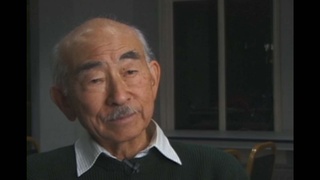
Being an American soldier and an "enemy alien"

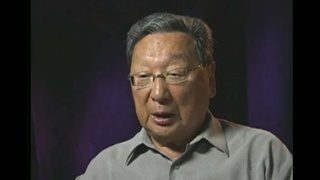
I have no feeling except that my parents of course came from Japan, and I really had no feeling about my “enemy” as it were. But I served in Hawai`i Territorial Guard for about a month or two, and we were called in and they said that all Japanese Americans are being discharged from the territorial guard. And we were considered “enemy aliens.” We were Japanese Americans nevertheless, and they said we were enemy aliens and that’s why we were discharged from the territorial guard.


discrimination interpersonal relations racism World War II

Date: May 29, 2006

Location: Hawai`i, US

Interviewer: Akemi Kikumura Yano

Contributed by: Watase Media Arts Center, Japanese American National Museum
Interviewee Bio

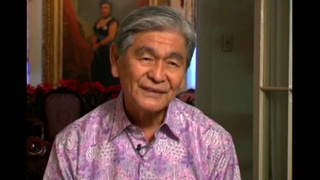
Francis "FranK" Y. Sogi was born in Lanihau, Kona, on the Big Island of Hawai‘i in 1923, the youngest of five children born to Issei parents who farmed vegetables, bananas and coffee.

Francis began studies at the University of Hawai‘i (UH) in 1941 at 18 years old, and—as required--served in the Reserve Officer Training Corps (R.O.T.C.) to prepare for military service. After the bombing of Pearl Harbor, all R.O.T.C. students were inducted into the Hawai‘i Territorial Guard. However, he was soon discharged as being an “enemy alien,” and he returned to UH to continue his education. Men at UH with knowledge of the Japanese language were being recruited to join the United States Military Intelligence Service, so Francis volunteered and in 1944 was sent to Camp Savage and Fort Snelling, Minnesota, for training.

After serving in Japan, translating documents for the U.S. counterintelligence corps, he once again enrolled at UH in 1947. He completed his studies in 1949 and went on to Fordham Law School in New York City while his wife, Sarah, attended Columbia University. He passed the bar exam in December 1952 and was admitted to the New York state bar. In 1953, Frank was asked to serve at the Tokyo office of the law firm of Hunt, Hill and Betts and represented Fortune 500 companies doing license agreements, joint ventures and investments of all kinds. From 1959 - 1984 he was with Miller Montgomery Spalding & Sogi, and in 1984 he joined Kelley Drye & Warren until his retirement in 1993.

Because of their growing philanthropic interests, Francis and his wife Sarah created the Francis and Sarah Sogi Foundation, a charitable foundation that currently supports the work of several non-profit organizations.

He passed away on November 3, 2011(November 2011)


George Ariyoshi
en
ja
es
pt
George Ariyoshi

Prom during the war

(b.1926) Democratic politician and three-term Governor of Hawai'i

en
ja
es
pt
George Ariyoshi
en
ja
es
pt
George Ariyoshi

Influence of veterans

(b.1926) Democratic politician and three-term Governor of Hawai'i

en
ja
es
pt
Jean Hayashi Ariyoshi
en
ja
es
pt
Jean Hayashi Ariyoshi

Day Pearl Harbor was bombed

Former First Lady of Hawai'i

en
ja
es
pt
Kazuo Funai
en
ja
es
pt
Kazuo Funai

Japan vs. the United States (Japanese)

(1900-2005) Issei businessman

en
ja
es
pt
Kazuo Funai
en
ja
es
pt
Kazuo Funai

Company in Tokyo burned down (Japanese)

(1900-2005) Issei businessman

en
ja
es
pt
James Hirabayashi
en
ja
es
pt
James Hirabayashi

Not bringing shame to family

(1926 - 2012) Scholar and professor of anthropology. Leader in the establishment of ethnic studies as an academic discipline

en
ja
es
pt
James Hirabayashi
en
ja
es
pt
James Hirabayashi

Life in camp as teenager

(1926 - 2012) Scholar and professor of anthropology. Leader in the establishment of ethnic studies as an academic discipline

en
ja
es
pt
James Hirabayashi
en
ja
es
pt
James Hirabayashi

Past ties to present situation in Middle East

(1926 - 2012) Scholar and professor of anthropology. Leader in the establishment of ethnic studies as an academic discipline

en
ja
es
pt
Robert Katayama
en
ja
es
pt
Robert Katayama

Being ordered to keep a diary that was later confiscated, ostensibly by the FBI

Hawaiian Nisei who served in World War II with the 442nd Regimental Combat Team.

en
ja
es
pt
Barbara Kawakami
en
ja
es
pt
Barbara Kawakami

Bombing of Pearl Harbor

An expert researcher and scholar on Japanese immigrant clothing.

en
ja
es
pt
Barbara Kawakami
en
ja
es
pt
Barbara Kawakami

Helping soldiers

An expert researcher and scholar on Japanese immigrant clothing.

en
ja
es
pt
Barbara Kawakami
en
ja
es
pt
Barbara Kawakami

Brother leaves for war, survival

An expert researcher and scholar on Japanese immigrant clothing.

en
ja
es
pt
Barbara Kawakami
en
ja
es
pt
Barbara Kawakami

Okinawan discrimination

An expert researcher and scholar on Japanese immigrant clothing.

en
ja
es
pt
Yuri Kochiyama
en
ja
es
pt
Yuri Kochiyama

Didn't have rights that whites had

(1922–2014) Political and civil rights activist.

en
ja
es
pt
Yuri Kochiyama
en
ja
es
pt
Yuri Kochiyama

Californians didn't know about evacuation

(1922–2014) Political and civil rights activist.

en
ja
es
pt

Discover Nikkei Updates

NIKKEI CHRONICLES #14
Nikkei Family 2: Remembering Roots, Leaving Legacies
Read the stories and give a star to the ones you like the most! Help select our Community Favorite.
Vote for Nima-kai Favorite!
VIRTUAL PROGRAM
Nikkei Uncovered V: a poetry reading
Tuesday, December 9
Hosted by traci kato-kiriyama
Featuring Aaron Caycedo-Kimura, Erica Isomura, and Syd Westley
SUPPORT THE PROJECT
Discover Nikkei’s 20 for 20 campaign celebrates our first 20 years and jumpstarts our next 20. Learn more and donate!